Aluminum & Stainless Steel Welding
ALUMINUM & STAINLESS STEEL WELDING IN Johnstown, CO
Aluminum melts at roughly 1,220°F, yet the oxide skin covering it melts near 3,700°F, so the surface must be cleaned and the heat tightly controlled or the weld will never fuse properly. Rhoades Welding provides aluminum and stainless steel welding in Johnstown, CO, for trailers, ramps, truck boxes, railings, tanks, brewing and dairy equipment, marine parts, and custom fabrication. We match process, filler, and gas shielding to each alloy, then clean finished welds so they look sharp and resist corrosion. Mobile service brings this precision work to your shop, farm, ranch, or business site anywhere across Northern Colorado and southern Wyoming.
THESE METALS PUNISH SHORTCUTS.
Aluminum pulls heat away fast and warps easily, while stainless steel loses corrosion resistance when overheated or contaminated by carbon steel tools. A general welder who treats them like mild steel leaves porous joints, burned-through panels, and discolored welds that rust. Getting them right takes dedicated prep, clean tools, and careful heat input from the first pass to the last.
We keep separate brushes and grinding discs for stainless and aluminum, control heat on every pass, and inspect each weld for complete fusion before the job is done.
- Aluminum trailer and ramp repair
- Stainless railings and fixtures
- Tanks, food, and dairy equipment
- Custom aluminum and stainless fabrication
ALUMINUM & STAINLESS STEEL WELDING
CLEAN, STRONG WELDS FOR JOHNSTOWN'S LIGHTEST AND TOUGHEST METALS.
Aluminum's light weight makes it ideal for horse trailers, utility trailers, truck boxes, and ramps, while stainless steel's corrosion resistance suits railings, food equipment, and outdoor fixtures. Both demand more skill than mild steel. We prepare joints to bright metal, use shielding gas suited to the alloy, and manage heat to prevent warping or burn-through. The result is a repair or fabrication that holds, looks professional, and keeps the metal's natural advantages intact.
SUITED TO NORTHERN COLORADO'S TRAILERS, DAIRIES, AND HOMES.
Around Johnstown, aluminum work often means horse and livestock trailers, boat trailers headed to nearby lakes, and truck toolboxes. Stainless jobs come from dairies, food processors, breweries, and homeowners who want railings that stay bright outdoors. Road treatments used on Colorado highways in winter speed corrosion on trailers and fittings, so we pay close attention to cleaning and protecting every joint. Our mobile setup reaches farms, businesses, and homes across the Front Range.
HEAT CONTROL IS A HABIT WE NEVER SKIP.
With aluminum and stainless, too much heat ruins the metal and too little leaves a weak joint. Across 6 years of welding in Northern Colorado, our owner has built a routine around that balance: clean prep, dedicated tools, the correct filler, and steady heat input. That consistency shows in welds that fuse completely and finish cleanly. We also explain your options honestly when a part is better replaced. Need a clean weld on a tricky metal?
WHAT PRECISION WELDING DOES FOR THESE METALS
Welds That Fully Fuse
Proper cleaning and heat control produce complete fusion instead of cold, porous joints. Repairs hold under vibration, loads, and road travel instead of cracking open again after a few hundred miles.
Corrosion Resistance Preserved
Clean technique and post-weld cleaning keep stainless steel from rusting at the weld. Your railings, tanks, and fixtures keep the long-term rust protection you paid for in the first place.
No Warped Panels
Controlled heat input keeps thin aluminum sheets and stainless panels flat. Trailers, boxes, and fabrications keep their shape and fit instead of buckling or rippling around every welded seam.
Lightweight Strength Kept Intact
Repairing aluminum trailers and ramps correctly preserves the weight savings that made you choose aluminum. You avoid heavy steel patches that add weight and invite galvanic corrosion where the metals meet.
A Professional Appearance
Neat, consistent welds look good on visible railings, fixtures, and equipment. Clean finishes matter for homes, storefronts, and food facilities where both appearance and hygiene truly count every single day.
Extended Equipment Life
Repairing a cracked aluminum trailer or stainless tank costs far less than replacement. Quality welds let valuable equipment keep working safely and reliably for many more years of hard service.
WHAT WE WELD
OUR ALUMINUM & STAINLESS WORK
These specialty metals show up on trailers, farms, businesses, and homes across Northern Colorado. Here are the aluminum and stainless steel welding services customers request from us most often.
ALUMINUM TRAILERS
Aluminum Trailer Repair
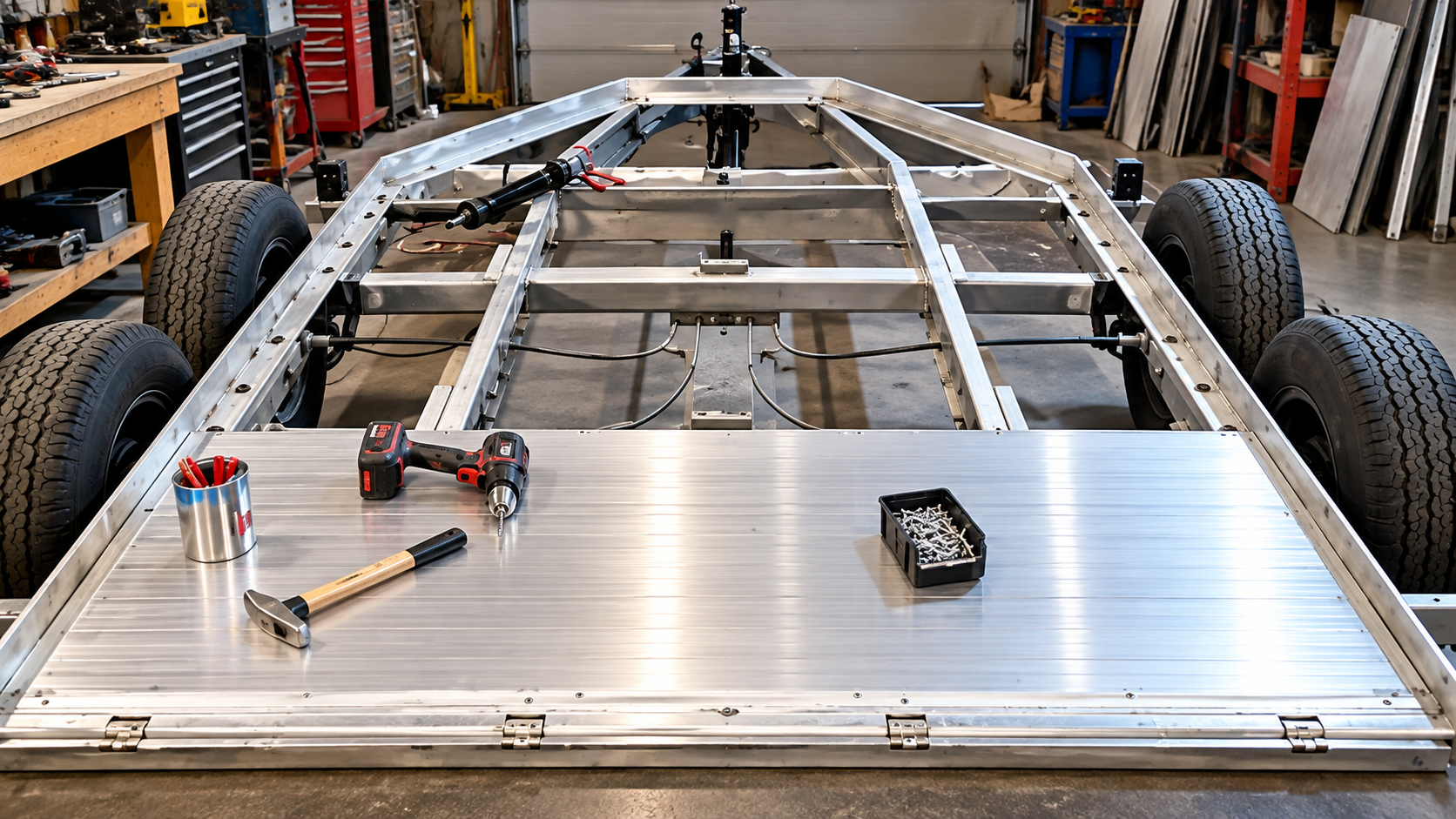
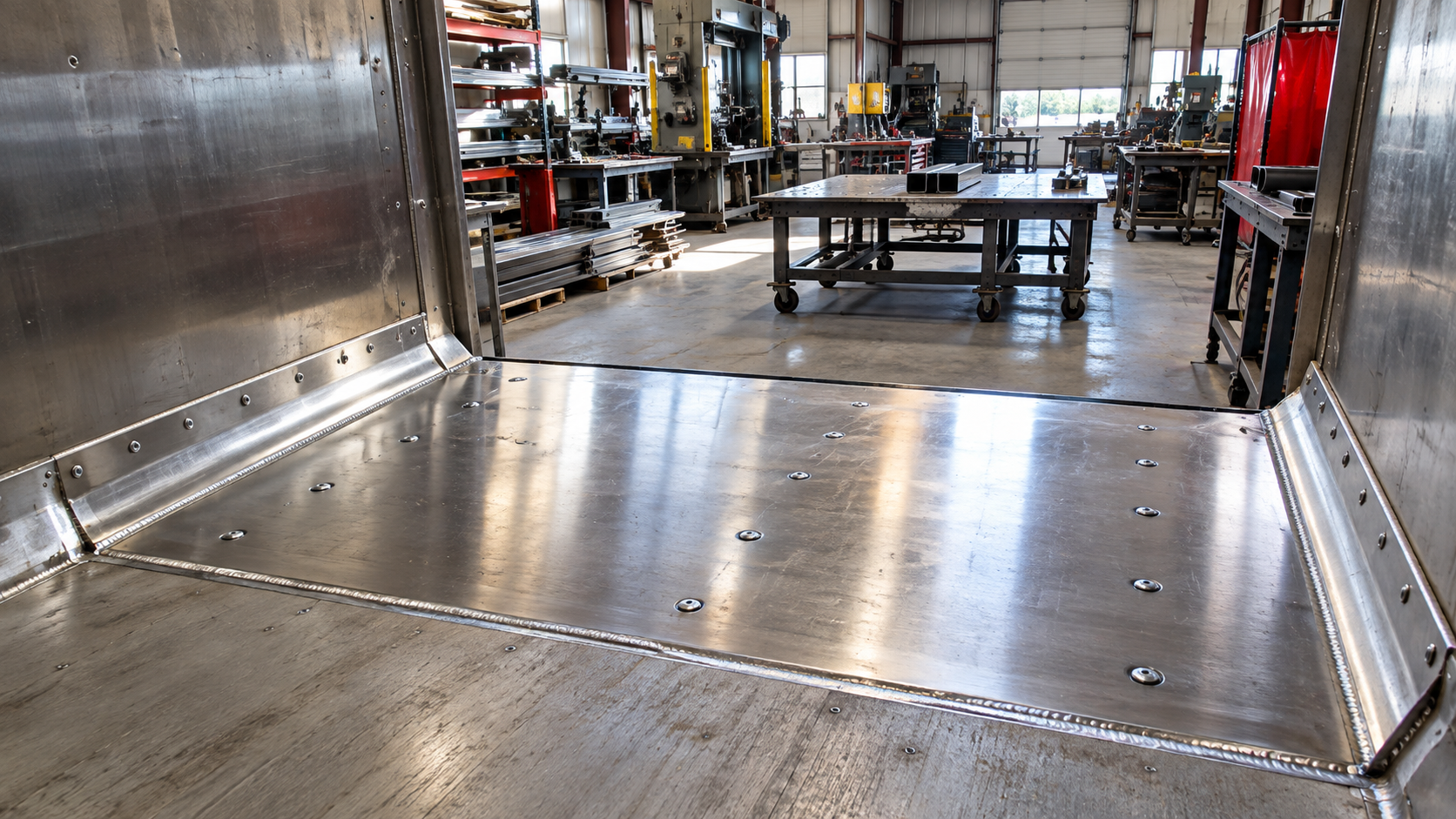
Cracked frames, broken crossmembers, damaged fenders, and worn ramps on horse, livestock, and utility trailers are repaired with correct filler and technique. We reinforce areas that keep cracking from vibration.
TRUCK EQUIPMENT
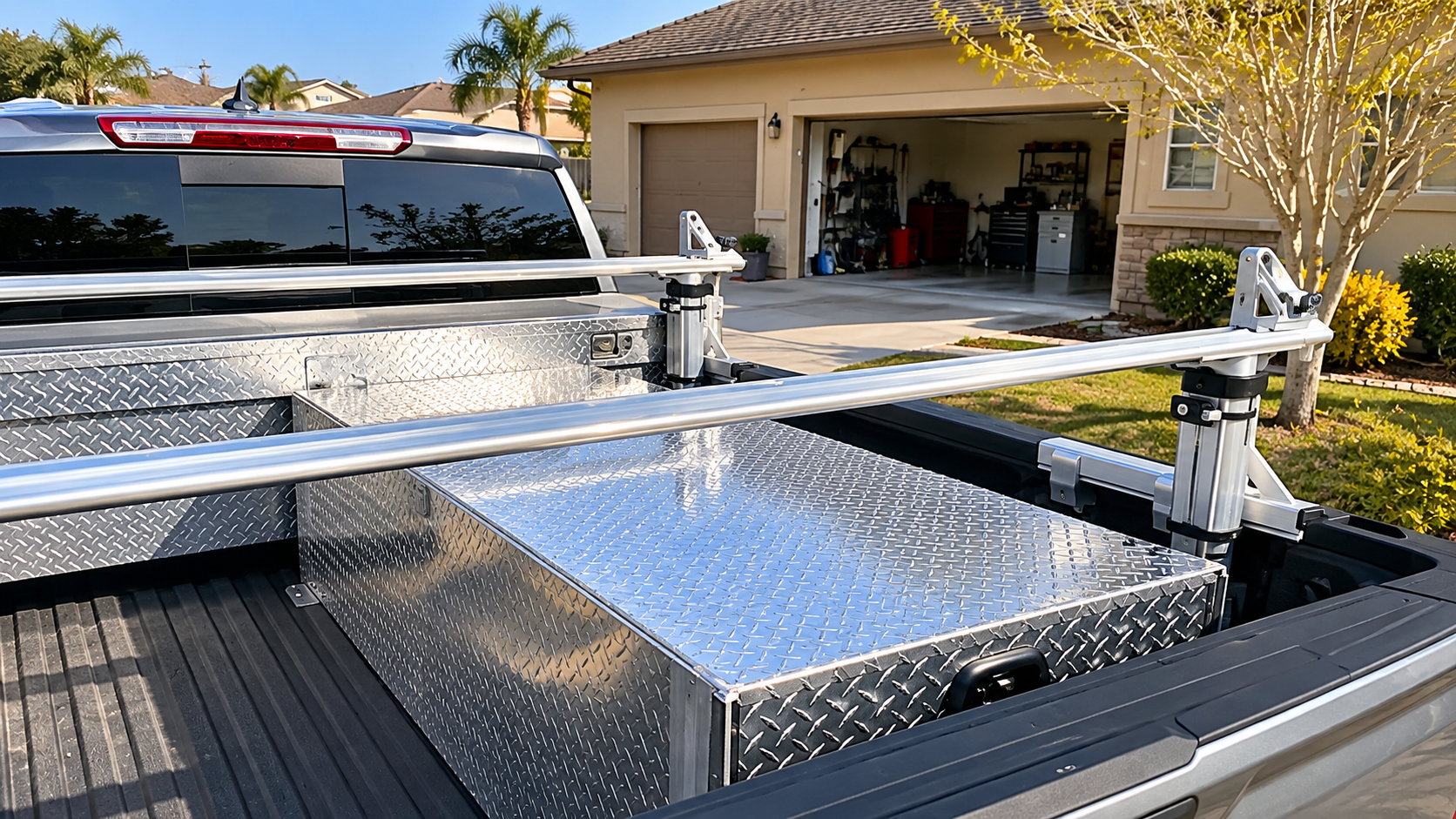
Truck Boxes, Ramps & Racks
Aluminum toolboxes, loading ramps, ladder racks, and headache racks are repaired or custom fabricated. Lightweight builds keep payload capacity available for the tools, parts, and materials your crew carries daily.
STAINLESS RAILINGS
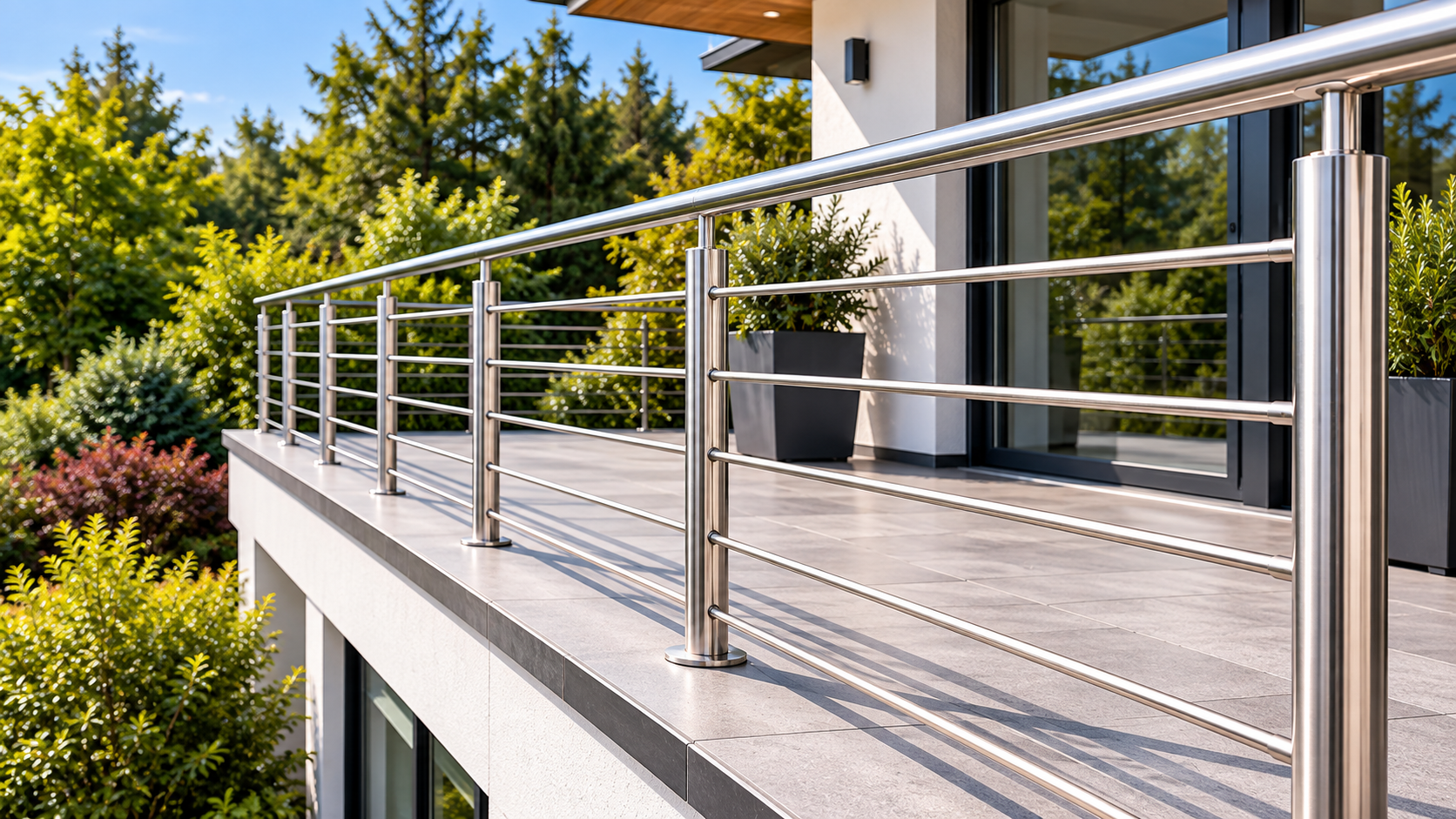
Stainless Steel Railings
Interior and exterior stainless railings are fabricated and repaired with clean welds and polished or brushed finishes. Stainless stays bright outdoors for years with very little maintenance or touch-up work.
FOOD & DAIRY
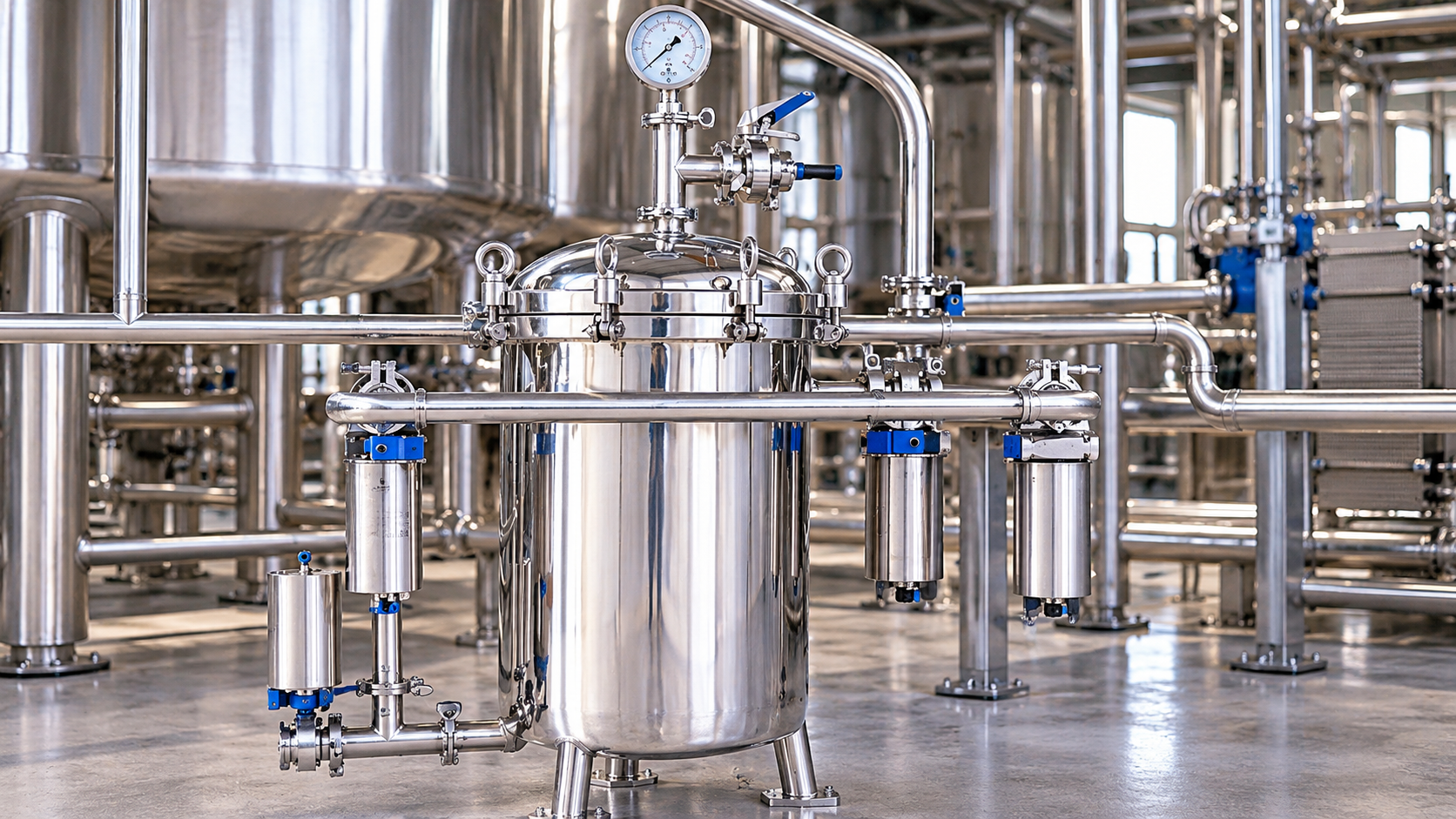
Food, Dairy & Brewery Equipment
Stainless tanks, tables, brackets, and fittings are welded with attention to smooth, cleanable surfaces. Proper shielding and post-weld cleaning help maintain corrosion resistance and sanitation standards for inspections and daily production.
TANKS
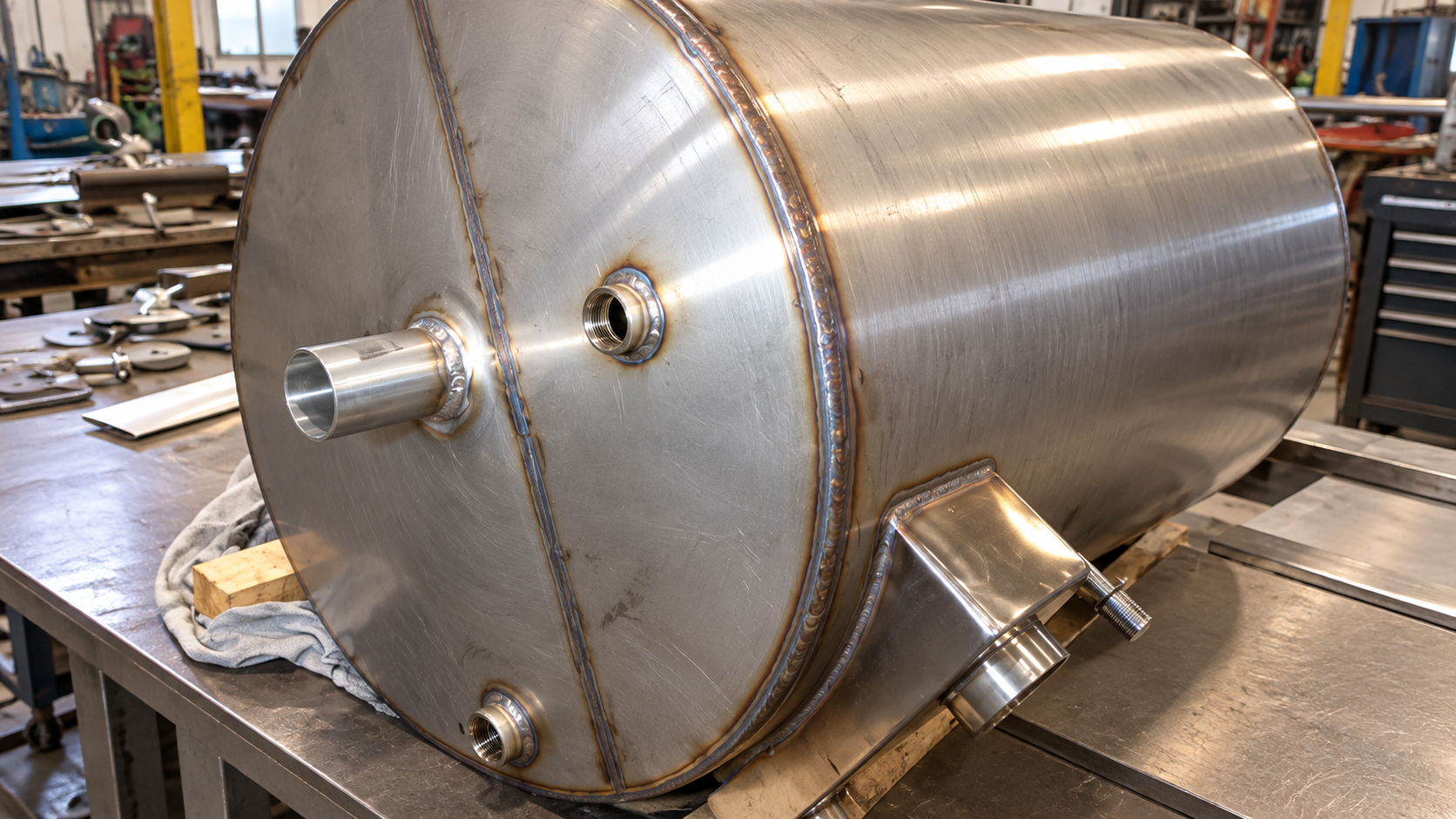
Tank & Container Repair
Leaking or cracked aluminum and stainless tanks, including fuel, water, and storage tanks, are repaired after proper cleaning and preparation. Safety steps come first before any heat is applied.
CUSTOM FAB
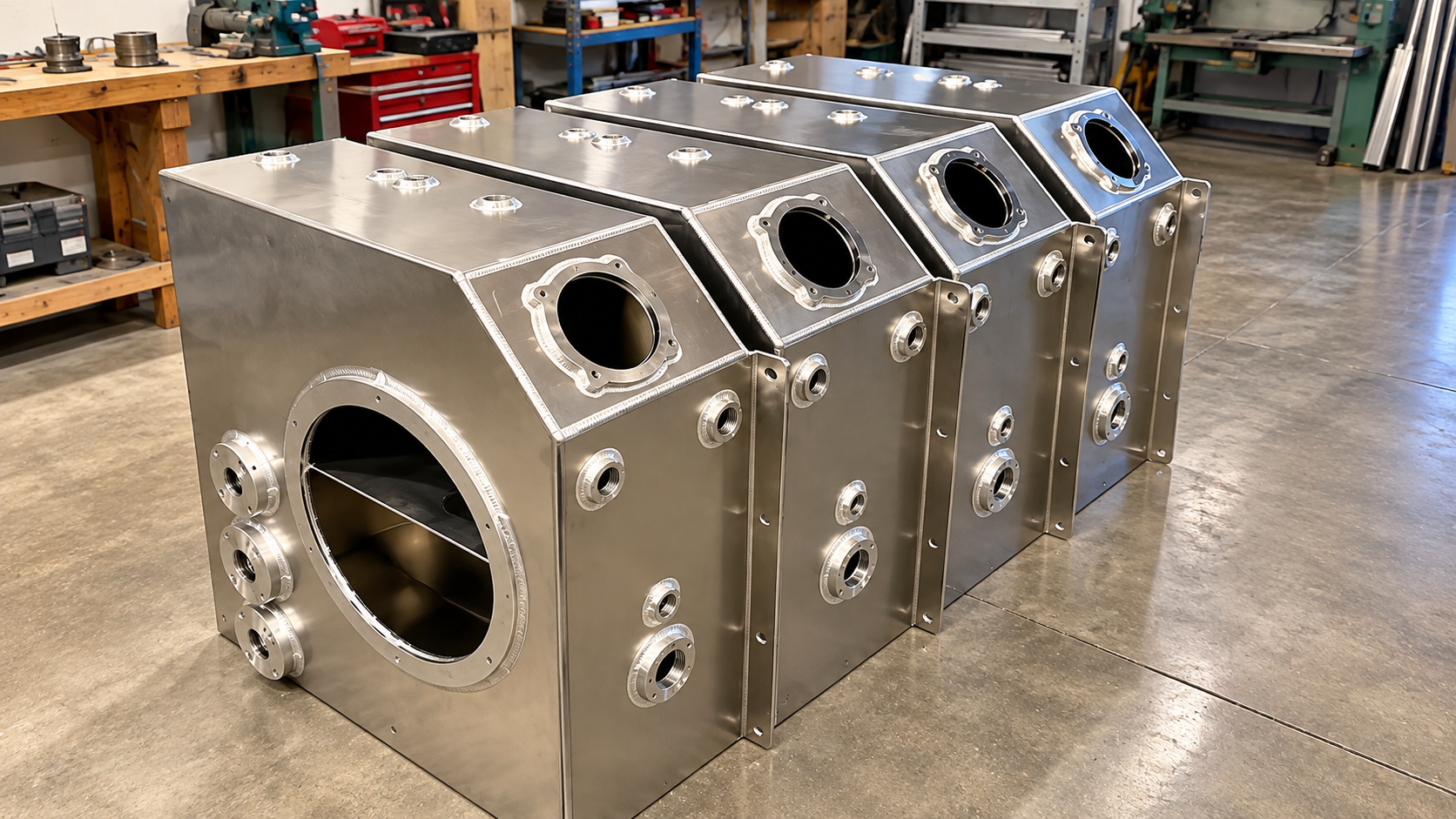
Custom Aluminum & Stainless Fabrication
Brackets, enclosures, guards, marine parts, and one-off pieces are built from aluminum or stainless to your drawing or sample. Each part is sized and finished for its specific purpose.
THE WORD ON OUR WORK
WHAT OUR CLIENTS SAY.
Trailer owners, business operators, and homeowners often comment on how clean our aluminum and stainless welds look and how well the repairs hold up. Their feedback reflects the extra care these specialty metals require on every job.
Common qUESTIONs
frequently asked
questions.
Aluminum and stainless steel raise specific questions about technique, strength, and corrosion. These answers cover what Northern Colorado customers most often ask before a specialty welding job.
Does aluminum welding require different techniques than steel?
Yes. Aluminum conducts heat faster and requires precise temperature control to avoid warping or burn-through. Its oxide layer must be removed before welding, and filler alloys are chosen to match the base metal.
Can stainless steel railings be welded for outdoor use?
Yes. Stainless steel is ideal for outdoor railings due to its corrosion resistance and low maintenance needs. Removing heat tint and cleaning the welds afterward keeps the finish from rusting at the joints.
Can a cracked aluminum trailer frame be repaired?
In many cases, yes. The crack is cleaned, ground out, and welded with matching filler, often with a reinforcement plate added. Heavily corroded or repeatedly cracked areas may need a new section instead.
Why does stainless steel sometimes rust near welds?
Overheating, leftover heat tint, or contamination from carbon steel tools can reduce stainless steel's corrosion resistance near the weld. Clean tools and thorough post-weld cleaning prevent that discoloration from turning into rust.
Is aluminum as strong as steel after welding?
Welding softens the heat-affected zone of many aluminum alloys, reducing strength near the joint. Good design accounts for that with thicker sections or reinforcement, so the repaired part still performs well.
Can aluminum be welded to steel?
Not directly with standard welding, because the two metals form brittle compounds. Special transition inserts or mechanical fasteners are used instead, with insulation to prevent galvanic corrosion where the metals meet.
Can Rhoades Welding repair aluminum trailers on site?
Yes. Rhoades Welding brings mobile equipment to farms, ranches, and homes around Johnstown, CO, repairing aluminum horse, livestock, and utility trailers without the need to tow them to a shop.
Why hire Rhoades Welding for aluminum and stainless work?
Customers in Johnstown, CO, choose Rhoades Welding because the owner applies 6 years of careful welding to these demanding metals, using dedicated tools and controlled heat for clean, lasting results.
HOW WE WORK
FROM DAMAGED METAL TO CLEAN FINISHED WELD, HERE IS HOW.
STEP 01
WE IDENTIFY THE ALLOY
We confirm whether the part is aluminum or stainless and, where possible, which grade or alloy it is. That determines filler selection, shielding gas, and heat settings for the specific repair or fabrication ahead.
STEP 02
WE CLEAN THOROUGHLY
Oil, paint, oxide, and dirt are removed with dedicated brushes and solvents. Clean metal is essential with these alloys, since contamination causes porosity, poor fusion, and weak, discolored welds that fail early under stress.
STEP 03
WE PREPARE THE JOINT
Cracks are ground out, edges are beveled, and parts are clamped in alignment. Proper fit-up reduces the heat needed and helps prevent warping or burn-through, especially on thin panels, sheets, and aluminum trailer skins.
STEP 04
WE WELD WITH CONTROL
We weld with the right process, filler, and shielding gas, managing heat on each pass. Short, steady passes keep panels flat and joints fully fused from root to cap without overheating the surrounding metal.
STEP 05
WE CLEAN AND FINISH
Stainless welds are cleaned to remove heat tint, and aluminum welds are dressed smooth where appearance matters. The finished joint looks professional, stays smooth, and keeps its natural corrosion resistance for years to come.
STEP 06
WE INSPECT AND RETURN
Each weld is inspected for fusion, cracks, and porosity before the part goes back into service. We share care tips so trailers, railings, and equipment stay in great shape for many years of use.