Welding Services for Corrosion-Resistant Metals
Aluminum and stainless steel welding for equipment, railings, and custom projects in Johnston, Colorado.
When your project in Johnston requires welding on aluminum or stainless steel, you need a welder who understands how these metals behave under heat and how to produce clean, strong joints without warping or contamination. Rhoades Welding LLC performs specialized welding on aluminum and stainless steel for equipment repairs, railing systems, structural components, and custom fabrication projects where corrosion resistance and long-term performance matter.
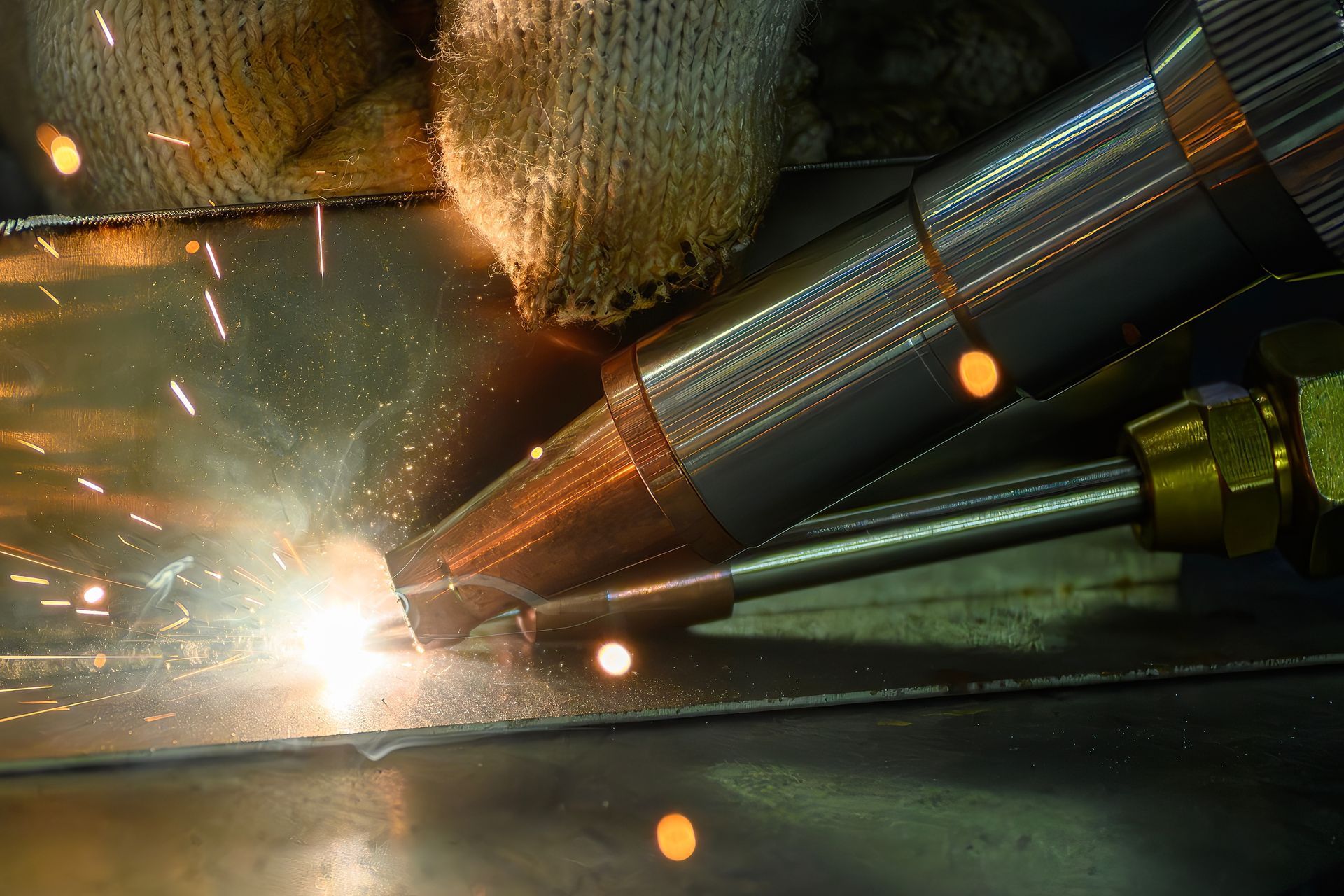
Aluminum welding uses TIG or MIG processes with inert gas shielding to prevent oxidation during the weld, and the metal is cleaned thoroughly before welding to remove surface contamination that can weaken the joint. Stainless steel welding requires similar shielding and often involves back purging to protect the inside of the weld from discoloration and corrosion. Both metals require precise heat control to avoid distortion, especially on thin material, and the finished welds are clean and uniform without excessive spatter or discoloration.
If you need aluminum or stainless steel welding for a project in Johnston, get in touch to discuss material specifications and welding requirements.
Why Aluminum and Stainless Steel Require Different Welding
Your project in Johnston involves material preparation, correct filler selection, and gas shielding to protect the weld pool from atmospheric contamination. Aluminum is cleaned with a stainless wire brush or solvent to remove oxide layers, and welding is performed with alternating current to break up surface oxides during the process. Stainless steel is welded with direct current and often uses a backing gas inside the joint to prevent sugaring, a form of oxidation that weakens the weld and causes discoloration.
After welding, you will notice that the joints are smooth and free of porosity, the metal has not warped or pulled out of alignment, and the surface retains its corrosion resistance without flaking or rust. Clean welds result in structural and functional components that perform reliably under long-term exposure to moisture, chemicals, and temperature changes.
The service is used across equipment repairs, railings, custom fabrication, and structural components, and includes experience with different material thicknesses from thin sheet metal to heavy plate. It does not include post-weld polishing, anodizing, or passivation unless specifically requested and quoted.
What to Expect When Welding These Metals
Customers often ask why aluminum and stainless steel cost more to weld, how the welds will look, and whether these materials can be repaired the same way as mild steel.
Rhoades Welding LLC provides aluminum and stainless steel welding services throughout Johnston, Colorado, using shielding gas, proper filler material, and heat control to produce clean welds suitable for corrosion-resistant applications. Reach out to discuss your project and receive a detailed quote.